
Why Arkansas Heat Drives Ants into Your Home – Legacy TPC
Thermal Migration: Why Extreme Heat Drives Ants Into Central Arkansas Homes
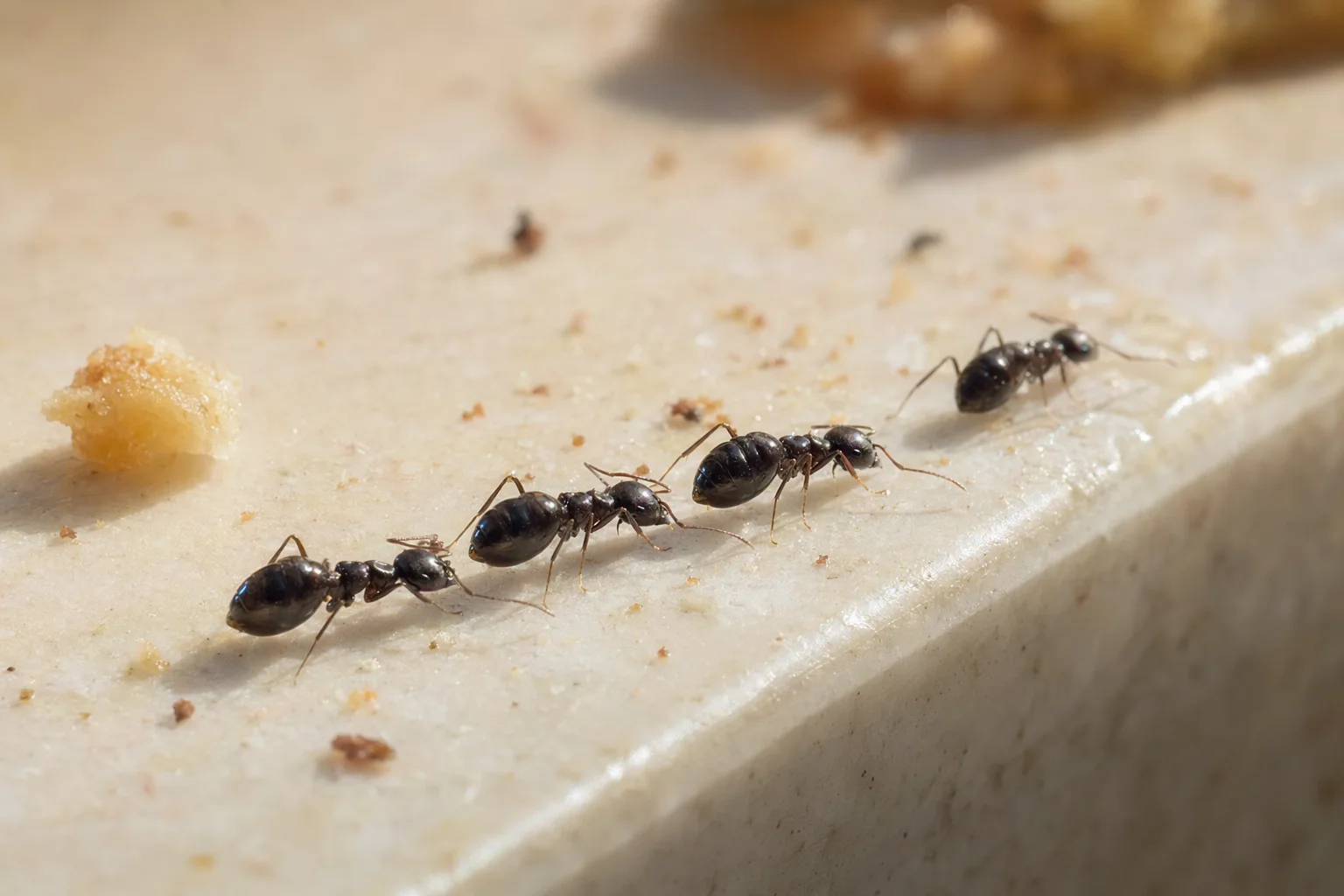
When summer heat hits Central Arkansas, homeowners across Little Rock, Conway, and Hot Springs begin seeing the same frustrating pattern: trails of tiny black ants marching across kitchen countertops, bathroom sinks, and pantry shelves.
The primary culprit behind these summer invasions is the Odorous House Ant (Tapinoma sessile), the most commonly encountered indoor ant species in Arkansas. While it might seem like they appear overnight out of nowhere, their sudden appearance inside your air-conditioned home is driven by biology and extreme summer weather.
The Quick Answer: Why does heat make ants come inside?
Extreme heat triggers thermal migration in ants. As cold-blooded creatures, their metabolic rate and foraging drive increase significantly between 75°F and 95°F. When summer temperatures bake the soil and dry out natural water sources, ant colonies migrate toward cooler environments with available moisture and food, making air-conditioned Arkansas kitchens and bathrooms the perfect safe-haven.
The Biology of Thermal Migration
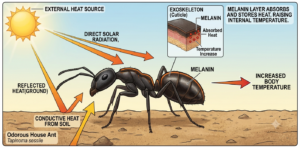 Ants are ectothermic (cold-blooded), meaning they rely on external environmental temperatures to regulate their body heat, metabolism, and reproductive activity. As temperatures rise, their biological processes speed up dramatically.
According to research from the University of Tennessee Institute of Agriculture, Odorous House Ants experience a major activity boost between 75°F and 86°F, maintaining intense foraging drives all the way up to 95°F.
During a typical Central Arkansas summer—where extended stretches above 90°F are standard from Little Rock to Searcy—ant colonies operate at peak reproductive and foraging capacity.
Why Your Kitchen Becomes Ground Zero
As outdoor soil bakes under the summer sun, outdoor moisture evaporates quickly. To survive, an ant colony requires two primary resources: shade/cool shelter and water.
Your home provides the perfect spot to find all the essentials.
-
-
Air Conditioning & Climate Control: Indoor spaces offer a stable, cool environment that protects the colony from fatal dehydration.
-
Abundant Moisture: Sinks, leaking pipe fixtures, dishwashers, and refrigerator drip pans provide a continuous supply of water.
-
Food Sources: Crumbs, spilled juices, pet food bowls, and open pantries give foraging workers the quick carbohydrates needed to nourish their growing colony.
-
How to Stop Heat-Driven Ant Invasions
DIY Prevention Checklist
To make your home less inviting to foraging workers, take these immediate preventative steps:
-
Eliminate Standing Water: Fix dripping faucets, wipe down wet sinks after dishwashing, and empty pet water bowls overnight.
-
Store Food in Airtight Containers: Odorous House Ants have a strong preference for sweets and fats. Keep sugar, syrups, and baked goods sealed tightly.
-
Seal Entry Points: Apply exterior-grade caulk around window sills, door frames, and utility pipe penetrations where ants cross into your foundation.

When DIY Traps Fail: Professional Ant Exclusion
Over-the-counter ant sprays often contain quick-kill pyrethroids that trigger a defense mechanism called “budding.” When a colony senses a chemical threat, the queens divide the colony and scatter into multiple sub-colonies throughout your walls, potentially turning one ant problem into three or four.
At Legacy Termite & Pest Control, our technicians use non-repellent transfer treatments. Foraging ants carry the product back to the main nest, eliminating the entire colony, including the queens, at the source.
Frequently Asked Questions
Q: Why are they called “Odorous House Ants”? A: When crushed, Odorous House Ants release a distinct chemical defense smell that many describe as rotten coconut or blue cheese.
Q: Will winter kill off the ants invading my kitchen? A: Not necessarily. If a colony successfully establishes a sub-nest inside your heated wall voids during the summer, they can remain active indoors all winter long.
Protect Your Home From Summer Pest Invasions
Don’t let summer heat turn your kitchen into an ant sanctuary. Whether you need seasonal protection in Hot Springs or targeted ant control in Little Rock, the team at Legacy Termite & Pest Control has four generations of experience keeping Arkansas homes pest-free.