
Mosquito Control in Arkansas | Pollinator-Safe Treatment
 Reviewed By: Mark Parker – Little Rock Pest Control Manager
Mosquito Control in Arkansas: How our Treatments Work and Why They’re Safe
As the rain and humidity begin to pick up around Arkansas, so do mosquito populations. From the wetlands of Conway to the lakeside properties of Hot Springs, mosquitos aren’t just a nuisance; they ruin your ability to enjoy your backyard and pose a risk to public health. That’s why professional mosquito control can be an essential relief!
At Legacy Termite & Pest Control, we believe you shouldn’t have to choose between a mosquito-free yard and a healthy environment. Here is a look behind the scenes at how our professional mosquito control works, how we preform it with the utmost safety, and how we protect our local pollinators.
The Quick Answer: How do professional mosquito treatments work?
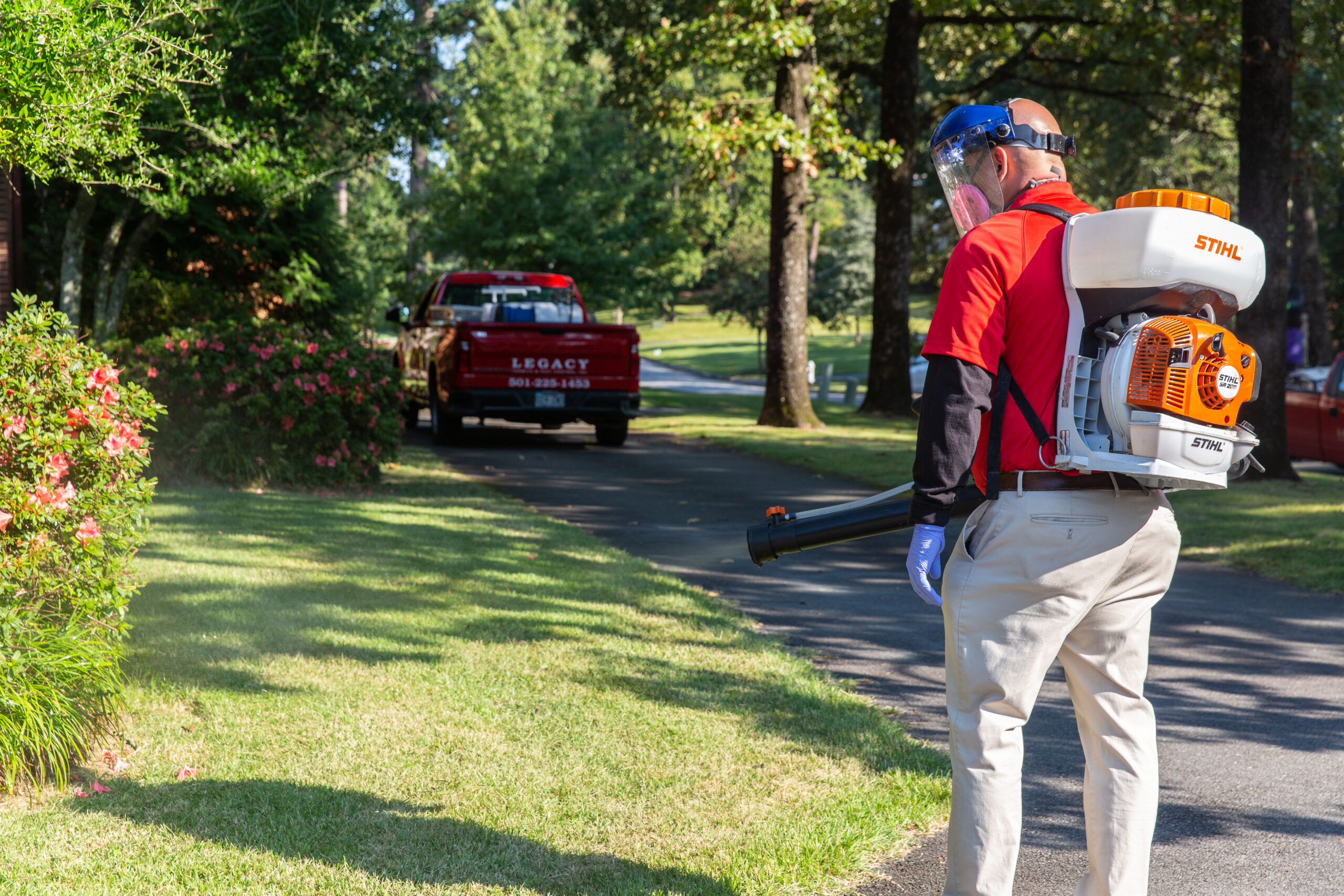
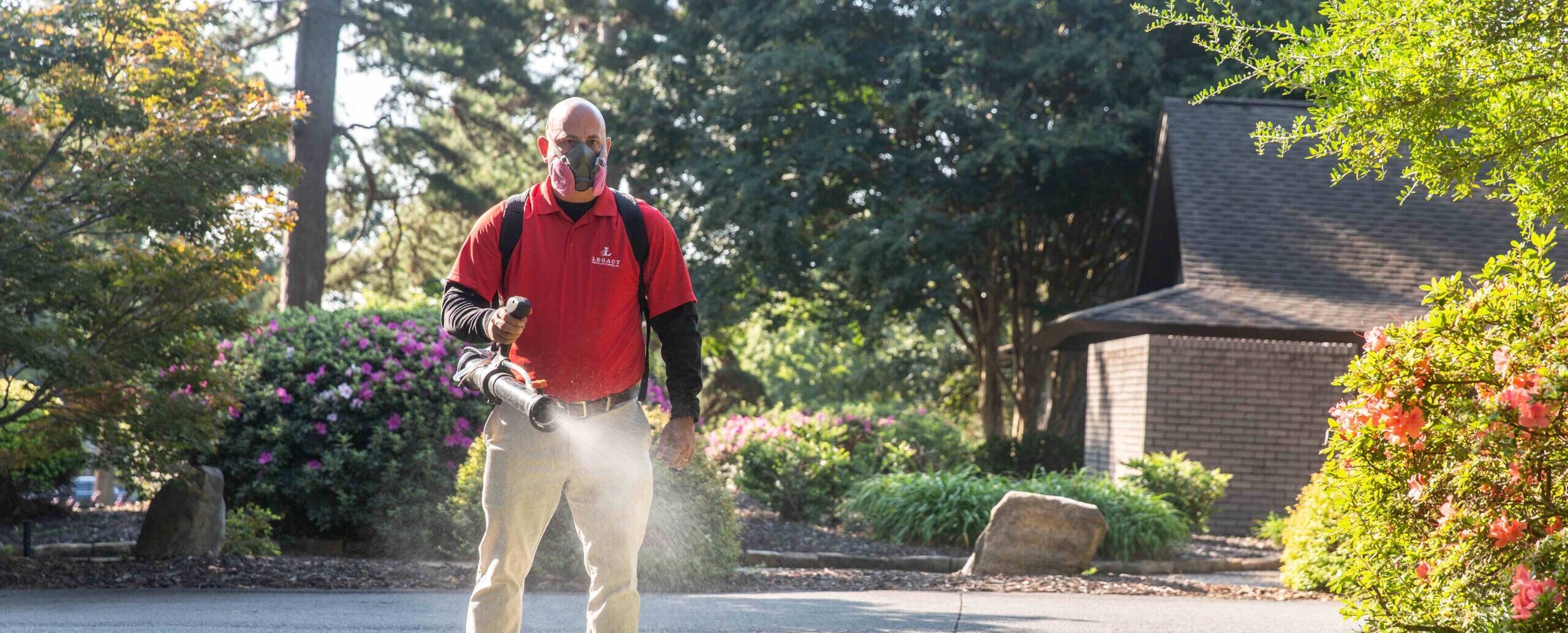
Professional mosquito treatment involves using a specialized mist blower to apply localized treatment to the underside of non-flowering leaves and dense greenery. By doing this, we target mosquitoes where they rest during the heat of the day. By avoiding flowering plants, we ensure that beneficial (and beautiful) insects like bees and butterflies remain safe while your mosquito population drops significantly.
The Science of the “Resting Site“
To understood how and why we treat the way we do, you first have to understand mosquito behavior. During the hot day, mosquitos will rest in shaded, cool areas such as shrubbery and dense greenery. If they spent all day flying around, they would dehydrate. This is why mosquitos are worse at dusk, as this is when they can safely make their way out to feed.
By using our high-powered blowers, we ensure they we reach deep into:
- The underside of shrubs and bushes.
- Low-hanging tree canopies.
- Dense ivy or ground cover.
When professionally applied to these areas we create a “contact zone.” Meaning when a mosquito lands there to rest, the treatment does its job.
The Legacy Difference: Protecting Our Pollinators
One of the most common questions we get from homeowners across Central Arkansas is: “Will this kill my butterflies and bees?”
The answer is… not if it’s done right. Our protocol is strict:
- Non-Flowering Greenery Only: We only apply treatments to greenery that does not produce flowers.
- Protecting Bees & Butterflies: Because pollinators are attracted to the nectar and pollen in flowers, we completely bypass gardens, flower beds, and blooming shrubs.
- Targeted Application: Unlike “fogging” which drifts everywhere, our mist blowers allow for surgical precision. We put the product only where the mosquitoes are.
By combining these treatment techniques, we can effectively handle mosquito populations while simultaneously protecting the essential bug populations that make our world beautiful.
The Treatment Window
Due to Central Arkansas’s relentless heat and humidity, mosquito season is a marathon, not a sprint. That’s why we provide our mosquito services monthly, typically starting around March/April and ending in September/October depending on the weather.
Why monthly?
Most professional-grade mosquito treatments are designed to be “weather-resistant,” but they aren’t permanent. After about 30 days of Arkansas sun and rain, the product typically begins to lose its effectiveness. Therefore, by returning once a month, we ensure there is never a gap in your protection, keeping your mosquito population under control all season long.
Helpful DIY Mosquito Control Tips
- Eliminate Standing Water – Mosquitos lay their eggs in standing water. This means something as simple as a empty pot or old kiddie pool can quickly turn your yard into a mosquito haven.
- Inspect Roof Gutters – Ensure gutters drain properly and are not clogged.
- Clean and Chlorinate Swimming Pools and Hot Tubs
Local Mosquito Alerts: Serving Central Arkansas
Due to the vast environmental differences across Central Arkansas, our technicians see different mosquito pressures everyday. Here is how we adapt:
- Hot Springs & Arkadelphia: Properties near Lake Hamilton or the Ouachita River often face heavier pressure. We like to focus primarily on perimeter tree lines and heavy shrubbery.
- Conway & Searcy: With new residential developments, we often focus on “buffer zones” between your lawn and the natural fields or woods nearby.
- Little Rock & NLR: In older neighborhoods with mature landscaping, we like to pay extra attention to dense ornamental shrubs and shaded backyard areas.
Frequently Asked Questions
Q: How long do I have to stay off the grass after a spray?
A: We recommend staying off treated areas until the product is completely dry, which usually takes about 15-45 minutes depending on the humidity.
Q: Does the spray smell?
A: Most customer never notice a scent. This is because we are targeting areas will mosquitos will land and rest.
Take Back Your Backyard This Spring and Summer
You don’t have to hide indoors this year. Whether you’re hosting a backyard BBQ or simply spending time outside with the family. Legacy Termite & Pest Control has the mosquito solution for you.