
Is Pest Control Safe for Pets? | Legacy Pest Control
Is Professional Pest Control Safe for My Pets? The Arkansas Pet-owner’s Guide

As pet ownership continues to surge across America, with over 70% of households now sharing their home with animals, Arkansas remains a leader in the pack. In fact, according to the Pet Advocacy Network, over 69% of households in Arkansas own at least one pet.
At Legacy Termite & Pest Control, we understand that your dogs, cats, and “fur-babies” aren’t just animals; they’re a part of the family. Many of our own technicians are pet parents themselves, which is why we prioritize your pets safety and always ask ourselves: “Is this safe enough for my own pet?”
The Quick Answer: Is pest control safe for pets?
Yes. When applied by licensed professionals following strict EPA-regulated mixing rates, modern pest control is highly safe for pets. By using a targeted application instead of the old technique of “broadcast spraying,” as well as observing a simple one hour wait-to-dry period, we can eliminate invasive pests without compromise your pet’s health.
The 3 Pillars of Pet-Safe Treatment
Safety isn’t a coincidence, it’s a protocol we live by every day. And when it comes to ensuring your pet’s welfare, we like to break it down into three distinct pillars. These pillars each have their own set of safety checks and treatment techniques to ensure the highest levels of protection for your home and well-being.
1. Internal Treatment
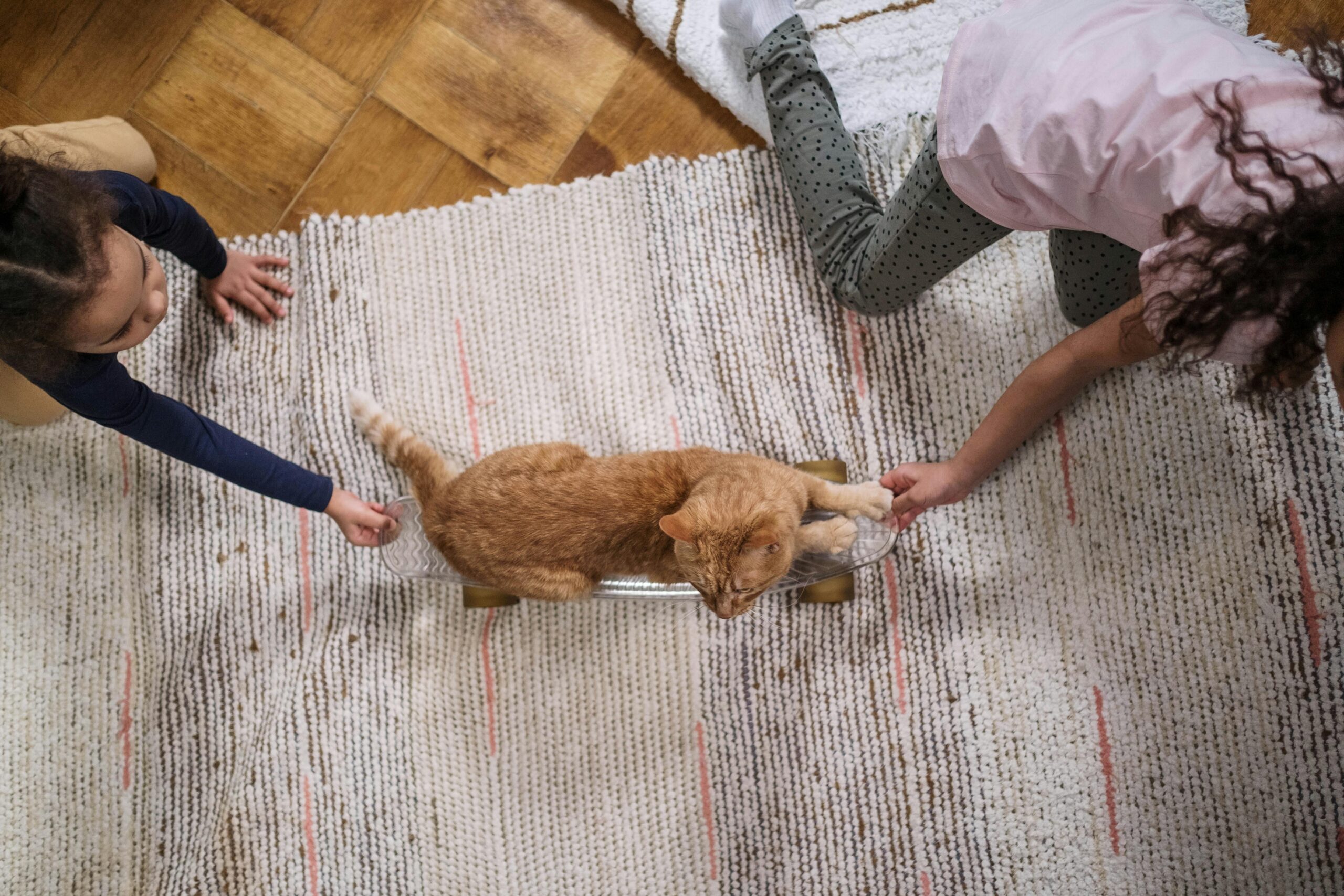
In the past, pest control technicians may have sprayed your baseboards from corner to corner. As mentioned earlier, this treatment was called “broadcast spraying.” Today, we focus intently on areas where pest traffic is the highest, these are the cracks and crevices of your home.
- The Method: We use concentrated treatment techniques to tackle gaps in your home where pests commonly hide. These areas include behind baseboards, around plumbing, and inside wall voids.
- Why It’s Safe: By focusing on the placing the product inside the structure rather than on it, we keep the active ingredients away from those curious paws and noses.
- The Protocol: Our technicians are trained to identify pet hotspots. We explicitly avoid spraying near food bowls, water dishes, pet beddings, etc. If we see a chew toy on the floor, we pick it up or work around it – we never spray over it.
2. External Treatment
Creating a barrier around your home is essential for keeping pests out, but many homeowner worry about their dogs playing in the yard after a treatment.
- The Mixing Rate: We strictly adhere to EPA-mandated mixing rates. Using a higher concentration doesn’t make a product work better; it only increases risk. We focus on using precise, effective doses.
- The One-Hour Rule: The most critical safety factor is drying time. Once our liquid application dries (typically within 30 minutes to an hour), it bonds to the organic matter of your yard.
- Why It’s Safe: Once bonded, the risk of any product transferring to skin or fur significantly declines. Furthermore, if some product were to transfer, it would be in such a trace amount that poses no health risk.
3. Rodent Control
Throughout history, rodenticide has been one of the most common ways pets end up getting sick in regards to pest control. Which is why we strive to alleviate pet owners anxieties when they have a rodent problem.
- The Equipment: We never toss loose bait in areas where a pet can reach them. Instead we use Tamper-Resistant Bait Stations.
- Why It’s Safe: These stations are made from heavy duty, high-impact plastic. They are dog-proof and can only be opened with a specific key carried by our technicians.
- The Design: The entry holes are sized strictly for rodents. A dog cannot reach the bait inside, nor can they crush the box to get to it. This allows us to control any rodent problems without risking accidental ingestion by your pets.
DIY Risks vs. Legacy Professional Safety
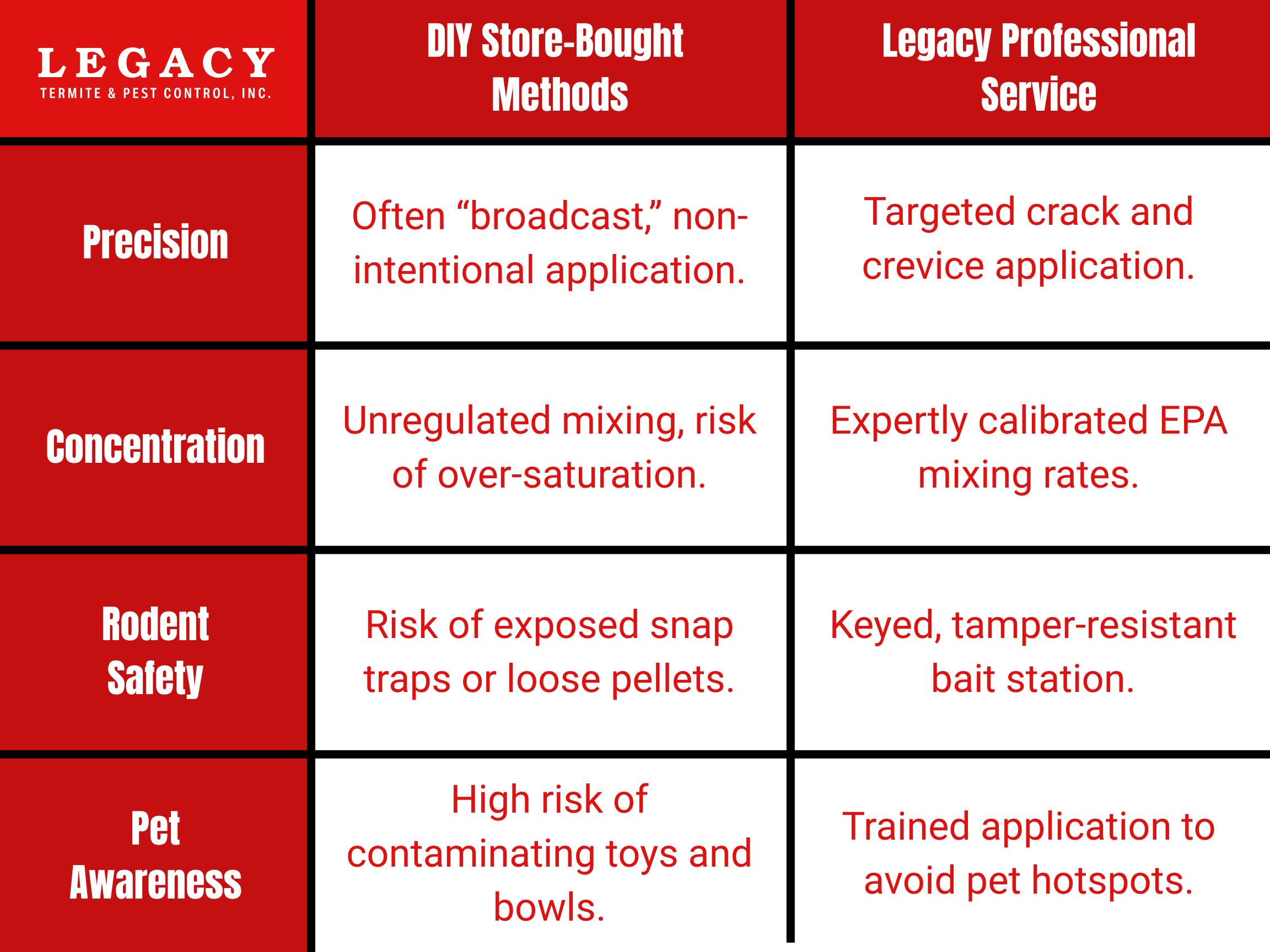
It’s common for homeowners to assume that doing a treatment themselves is safer because they control the bottle. However, data from the ASPCA and the NPIC shows that the majority of pet poisonings aren’t caused by the chemicals themselves, but by accidental access and improper mixing by homeowners.
Frequently Asked Questions from Pet Owners
Q: What if my pet eats a bug that was killed by your treatment?
A: Modern pest control uses a dose-response model. The amount of active ingredient required to eliminate a roach or other pest is microscopic. Far too small to cause any secondary poisoning to a cat or dog that eats it.
Q: How long do I really need to keep my dog off the grass?
A: Our standard golden rule is one hour. Once the liquid treatment has dried, it bonds to the surface and is safe for pets to re-enter the area.
Q: Do I need to move my fish tank?
A: You don’t need to move it, but we do ask you cover the top of the tank with a towel and temporarily turn off the air pump during interior treatment to prevent any airborne particles from entering the water.
Protecting Your Whole Family
At Legacy Termite & Pest Control, we don’t just see a pest problem; we see a home that needs to be protected. Whether you live in Little Rock, Conway, Hot Springs, Arkadelphia, North Little Rock, or Searcy, our technicians treat your property with the same care they would their own.
You can rest easy knowing your pest protection is tough on bugs, but gentle on your best friends.