
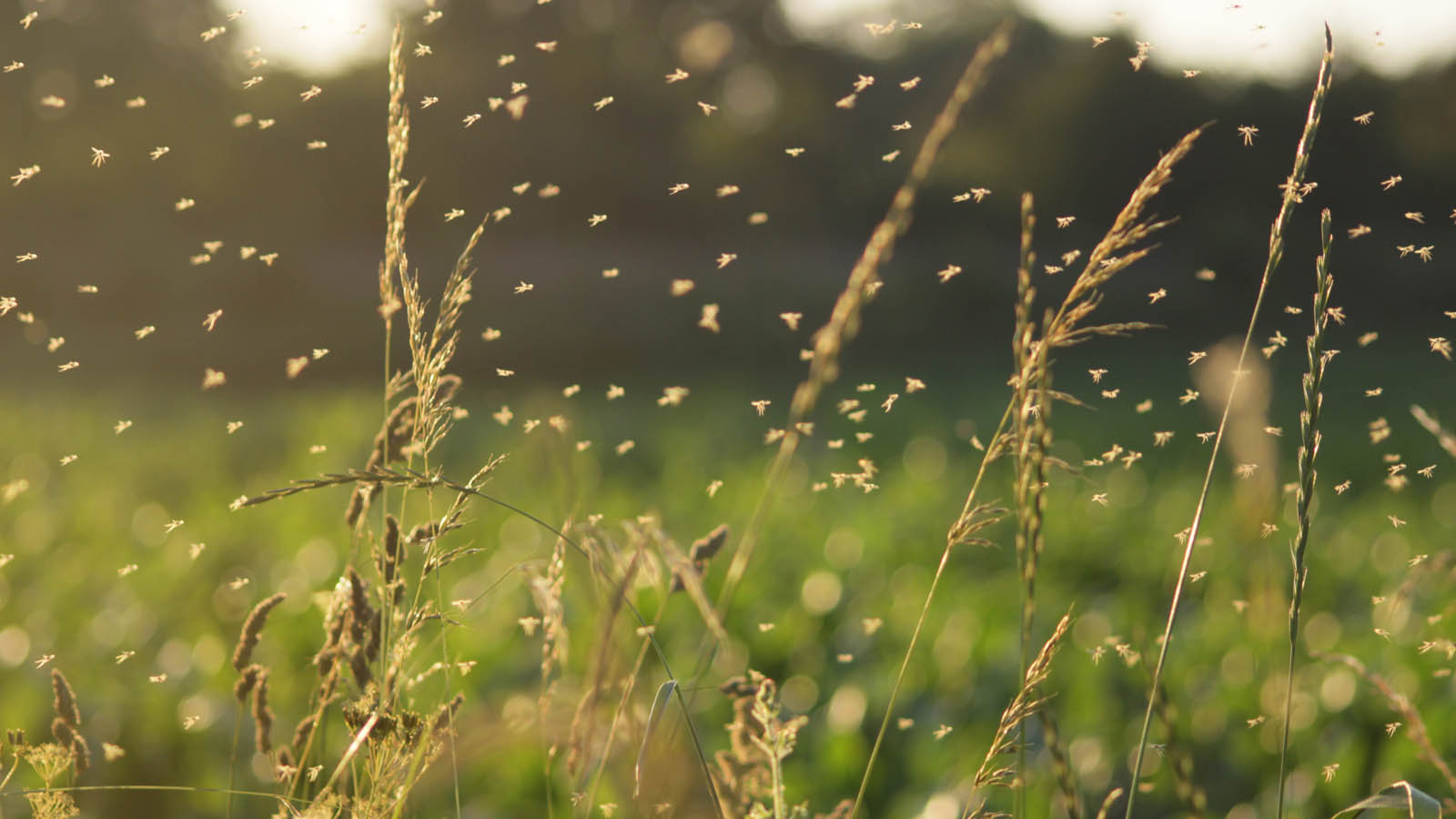


Gnats are most common from the Spring through the Fall.
Gnat Treatments
Gnats are small, delicate insects that are easily recognizable by their long, slender legs, narrow wings, and tiny bodies, often measuring just a few millimeters in length. They are generally weak fliers and tend to hover close to their preferred food sources rather than traveling long distances. Depending on the species, gnats are attracted to different types of organic material, including overripe or damaged fruit, moist soil found in houseplants, and decomposing food waste in garbage cans or kitchen disposals. Some species are also drawn to areas with excess moisture, such as clogged drains or damp mop buckets.
Although gnats are often considered a minor household nuisance, they can pose health risks. Because they frequently feed and breed in unsanitary environments, gnats can transfer bacteria and other pathogens from contaminated surfaces to clean food and kitchen areas, potentially spreading illness. Their rapid breeding cycle allow populations to multiply quickly, turning a few stray insects into a full infestation in a matter of days.
Eliminating gnats typically requires a multi-step approach. The first step involves locating and removing breeding sites, such as cleaning drains, emptying trash bins regularly, and allowing potting soil to dry between waterings. Next, any accessible food sources – like uncovered fruit, spills, or organic debris – should be eliminated. Finally, targeted extermination methods, including traps or insecticides, can be used to reduce the remaining adult population. Consistent sanitation and moisture control are key to preventing future infestations.
Have you seen signs of gnats around your property? Contact Legacy today for a free no-obligation pest consultation.